
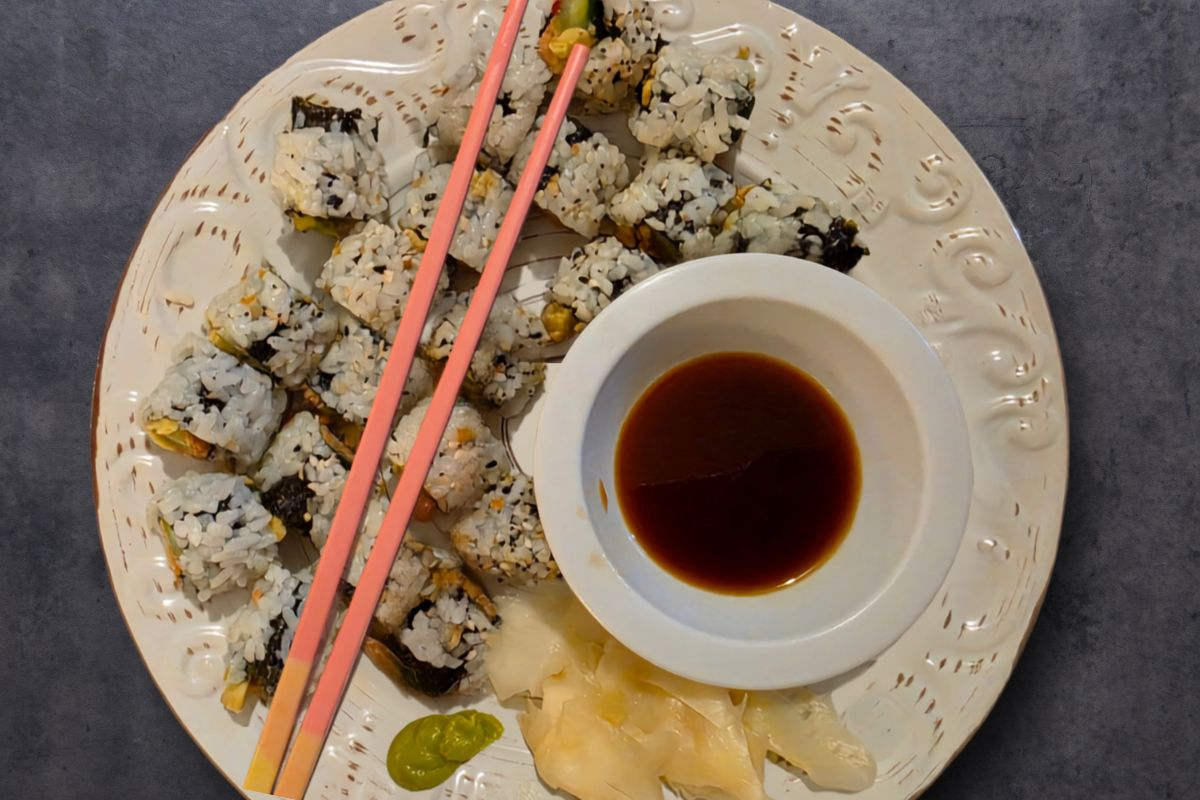
If you’ve never made easy homemade tuna sushi at home, it can sound like an overwhelming task. Eating raw fish can make anyone a little nervous (even if you love sushi), but something about making it at home seems even more unnerving. Luckily, these easy, homemade tuna sushi rolls are a lot simpler to make than you may think. Plus, no need to use raw fish.
This is my favorite way to make homemade sushi without a long list of ingredients or a lot of prep. They’re made with seasoned sushi rice, a tuna packet, avocado, cucumber, and nori. I use Everything But the Bagel seasoning for a little extra flavor. Plus, I just can’t be bothered to buy sesame seeds when they’re already in this seasoning.
I personally prefer using the jalapeño-flavored tuna packet because I like a little kick. However, you can use whatever flavor you like or just stick with plain tuna.
Once you cook the rice, there’s no more cooking involved. Just assemble, roll, slice, and enjoy.
This article contains affiliate links, which means I may earn a small commission from qualifying purchases at no extra cost to you.
Canned tuna VS tuna packets for homemade sushi
You can make these with canned tuna if that’s all you have on hand, but I highly recommend using tuna packets. Cans tend to have a lot of excess water and oil, which can get pretty messy when making sushi.
With packets, there isn’t a can to drain first. This is particularly helpful with sushi, as too much moisture in the filling can make your roll soggy and harder to keep together.
What You’ll Need for Easy Tuna Sushi Rolls
One of the best things about this recipe is how short the ingredient list is.
You’ll need:
- Sushi rice
- Nori sheets
- Tuna packets
- Avocado
- Cucumber
- Everything But the Bagel seasoning (optional)
- Your favorite sauce for dipping or drizzling (optional)
Your exact quantities and instructions are in the recipe card below, but there are a few things worth knowing before you start.
What I Use to Make Homemade Sushi Easier
Believe it or not, you don’t need a ton of special equipment to make sushi at home. That said, there are a few basic products that can make the process easier and more enjoyable. These are the tools and ingredients I use when I make my own sushi.
Sushi Mat & Paddle
You can roll sushi with plastic wrap in a pinch, but a bamboo sushi mat makes it much easier to get a tight, even roll. If you plan on making sushi more than once or twice, it’s worth having one.
Nori sheets
I order my nori sheets from Amazon so I can keep a pack in the pantry whenever a sushi craving hits. Nori sheets are the seaweed sheets that hold everything together and add that slightly salty, umami flavor.
Or if you’d prefer to mix it all in a bowl and scoop it into bite-sized seaweed sheets, you’ll want seaweed snacks. The teriyaki is my favorite flavor, but choose your favorite! (As a bonus, they’re all gluten-free!)
Chopsticks
Not technically necessary, obviously, but they make homemade sushi a lot more fun. They’re also handy for picking up individual pieces without squishing them. The pink are my favorite, but they come in several colors and designs.
Wasabi
A little wasabi goes a long way. Add a small amount to your dipping sauce or dab just a touch onto each piece if you like that sharp, spicy kick.
Wasabi paste (this one is spicy!) →
Pickled Ginger
Pickled ginger adds a bright, slightly sweet and tangy contrast between bites. I like serving a small pile alongside the rolls so you can grab a piece whenever you want.
Soy Sauce or Coconut Aminos
Either works as your dipping sauce. Soy sauce gives you that classic salty sushi flavor, while coconut aminos are a slightly sweeter alternative. Use whichever one fits your taste and dietary needs. I have celiac disease, so I alternate between using gluten-free soy sauce and coconut aminos.
Gluten-free soy sauce →
Coconut aminos →
Rice vinegar
You don’t have to use this to make your rice if you’d prefer not to, but this is what gives sushi rice that subtle tangy-sweet flavor that makes it taste like sushi rice instead of just plain rice. A little goes a long way, and it’s an easy pantry staple to keep around if you plan on making sushi at home regularly.
If you choose to make this version of sushi rice, cook 1 cup of sushi rice according to the package directions, then gently fold in 2 tablespoons rice vinegar, 1 tablespoon sugar, and ½ teaspoon salt while the rice is still warm, and let it cool to room temperature before rolling.

Start With the Right Rice
Although you can technically use whatever white rice you have in your pantry, sushi rice is made for making, well, sushi. It’s a short-grain rice that becomes sticky when cooked, which is what helps keep your rolls together. Long-grain varieties don’t work quite as well.
Make sure to let your rice cool for a bit after cooking before assembling your sushi. Piping-hot rice can destroy the texture of your nori, which makes it harder for your roll to stay together.
When spreading the rice, you don’t need a huge layer. Just add enough to get a big enough layer to cover most of the nori, but without being ultra-thick.
Keep the Fillings Simple
You don’t need a bunch of fancy ingredients to make homemade sushi. Just grab a meat (tuna packet, cooked shrimp, leftover fish, imitation crab, etc.), a veggie (cucumber, carrot sticks, etc.), and a fat (spicy mayo, avocado, cream cheese, etc.)
For the veggies, make sure they’re in thin strips so they’re easy to arrange. Alternatively, you could cut the cucumber into a ½-inch wide, long sliver and just slap it on the roll. I do this sometimes when I don’t feel like making the teeny tiny cuts.
How to Roll Sushi at Home Without Making a Complete Mess
Your first attempt at making homemade sushi rolls may not look magazine-worthy, and that’s perfectly fine. It takes a bit of practice to make tight rolls that have that restaurant-like appearance.
That said, there are a few tips that can make rolling a lot easier.
- Keep your hands damp. Sushi rice is extremely sticky. So, keep a small bowl of water nearby to wet your fingertips before touching it.
- Don’t pile on the rice. Keep the layer relatively thin.
- Don’t overfill the center. You only want 3-4 matchstick carrots or cucumber, a tiny chunk of meat, and a sliver of avocado.
- Roll the sushi firmly, but gently. Use enough pressure to keep it together, but don’t press so hard that it smashes all of the ingredients.
- Use a sharp knife and angle your cut. A dull knife will push down on the roll and squeeze the ingredients out the side. Angling your knife and gently gliding it works better than pushing straight down.
- Wet your knife between cuts to prevent the stickiness from the rice building up on the blade.

Make your homemade sushi rolls Spicy
I personally use jalapeño to give that extra kick, but there are other options to add a little spice.
You can top it with a drizzle of spicy mayo or cilantro, or layer a few small slices of fresh jalapeños in your rolls.
Wasabi is also a great way to add a little extra spice. If you use the paste I recommended above, keep in mind that it’s extremely spicy. You may want to dilute it with cold water or a little mayo.
Easy Add-Ins and Swaps
You don’t have to make homemade tuna sushi rolls: you can use whatever meat you have on hand. Chopped up shrimp, imitation crab, and even small slices of leftover fish can work beautifully. I also use cold-smoked salmon from time to time. It feels like you’re eating it raw, but it’s technically cooked.
If you’re not a fan of avocado, you can replace it with cream cheese, mayo, or spicy mayo.
Veggies are also pretty versatile. Matchstick carrots, green onion, or broccoli can add flavor and crunch.
Experiment with your toppings. Chili crisp, green onion, sesame seeds, tempura flakes, or sriracha are great for adding some flavor.
Don’t Want to Roll It? Make a homemade Tuna Sushi Bowl
Honestly, rolling the sushi can be fun at times. Other days, I’d much rather throw it all in a bowl and eat it that way.
Either chop nori sheets into smaller pieces or use Seaweed Snacks to hold your fillings. Mix the rice, tuna, cucumber, avocado, and your favorite sauce in a bowl. Use a spoon to pile the filling on bite-sized seaweed sheets.
For an even easier meal, rip the seaweed into smaller pieces and mix it in with the other ingredients.

What to Serve With Tuna Sushi Rolls
These sushi rolls pretty much have everything you need for a balanced meal, but you can also vary it up by serving it with a side or two.
Serve them with cucumber salad, edamame, miso soup, or even a few sliced veggies.
A Note for Gluten-Free Sushi
The basic ingredients in these tuna avocado cucumber rolls can be easy to adapt for a gluten-free diet, but make sure to check the ingredients for everything you use.
Sushi rice, rice vinegar, and soy sauce can all contain gluten, depending on the product. Everything I recommended in the above section is gluten-free, however.

Easy Tuna Avocado Cucumber Sushi Rolls at Home
Equipment
- Bamboo sushi mat (you can use Saran wrap if you don’t have a mat)
- Sharp knife
- Cutting board
- Small bowl of water to wet your hands
- Rice cooker or pan
- Mixing bowl
- Large spoon or rice paddle
Ingredients
- 1 cup uncooked sushi rice
- 1 ¼ cups water or amount directed on rice package
- 2 tablespoons rice vinegar
- 1 tablespoon sugar
- ½ teaspoon salt
- 2 sheets nori
- 1 tuna packet plain or flavored
- ½ avocado thinly sliced
- ½ small cucumber cut into thin strips
- 1 Everything But the Bagel seasoning
- Soy sauce or tamari for serving
- Spicy mayo sriracha, or other favorite sushi sauce, optional
- 2 tablespoons rice vinegar
- 1 tablespoon sugar
- ½ teaspoon salt
Instructions
- Cook the sushi rice according to package directions, season it as desired, and let it cool slightly.
- Prep the fillings by slicing the avocado and cucumber into thin strips.
- Once the rice is cooled off but still warm, stir together the rice vinegar, sugar, and salt until the sugar is mostly dissolved. Gently fold the mixture into the cooked rice without mashing it.
- Place one sheet of nori on your bamboo sushi mat with the shiny, smooth side facing DOWN and the rougher side facing UP. The rice goes onto the rough side, which helps it stick.
- Spread a thin layer of rice evenly over the nori, leaving a small border at one edge. Wet your fingers as needed to keep the rice from sticking.
- Add the tuna, avocado, and cucumber in a line across the center of the rice.
- Roll the sushi tightly, using the mat or saran wrap to gently press and shape the roll as you go.
- Slice with a sharp, damp knife into even pieces.
- Finish with Everything But the Bagel seasoning and serve with your favorite dipping sauce.
Frequently Asked Questions About Homemade Tuna Sushi
Can I use canned tuna instead of a tuna packet?
You can, though I prefer tuna packets because they don’t contain excess liquid. If you use a tuna can, make sure to drain it really well before adding it to your roll.
Do I need a sushi mat to make sushi?
Nope! You can use plastic wrap if you don’t have a sushi mat. However, a bamboo sushi mat can make it easier to get a tight, evenly shaped roll.
Which side of the nori does the rice go on?
Place the nori with the shiny, smooth side facing down and the rough side facing up.
Why does my sushi fall apart when I cut it?
Your sushi roll may fall apart if it’s overfilled, rolled too loosely, or you used a dull knife.
Can I make this recipe without rolling sushi?
Of course! Just throw all of the ingredients in a bowl with your favorite sauce, mix, and serve with seaweed snacks..
How long does homemade tuna sushi last?
It’s best to eat homemade sushi fresh, mostly because the avocado can brown and refrigerated sushi rice changes texture. If you do have leftovers, store them covered in the refrigerator and eat them within a day or so.
Leave a Reply